Pratfall Effect: Why Admitting Flaws Builds Trust (6 Examples)
TL;DR
The pratfall effect is a psychology finding: people who reveal a small flaw are trusted more than people who look flawless. Harvard psychologist Elliot Aronson demonstrated it in 1966. A competent person who spilled a cup of coffee was rated more likeable than the same person who didn’t.
It works in marketing for one reason. Everyone else is busy looking perfect. Perfect track record, perfect case studies, perfect five-star reviews. Buyers have a bullshit detector and it’s well tuned. Admit a real flaw, out loud, and you become the one brand that sounds like it’s telling the truth.
In B2B this is close to free. Your competitors are too scared to try it. That’s the opening.
Back in 2015, I got obsessed with companies sharing their numbers in public
Basecamp, Baremetrics, Buffer. All of them putting their revenue, their churn, their mistakes out in the open. It looked like a crazy new way to differentiate by doing the thing nobody else would do.
I was so into it that I did the same when I launched my first marketing agency. Every month, we’d publish our results as a blog post.
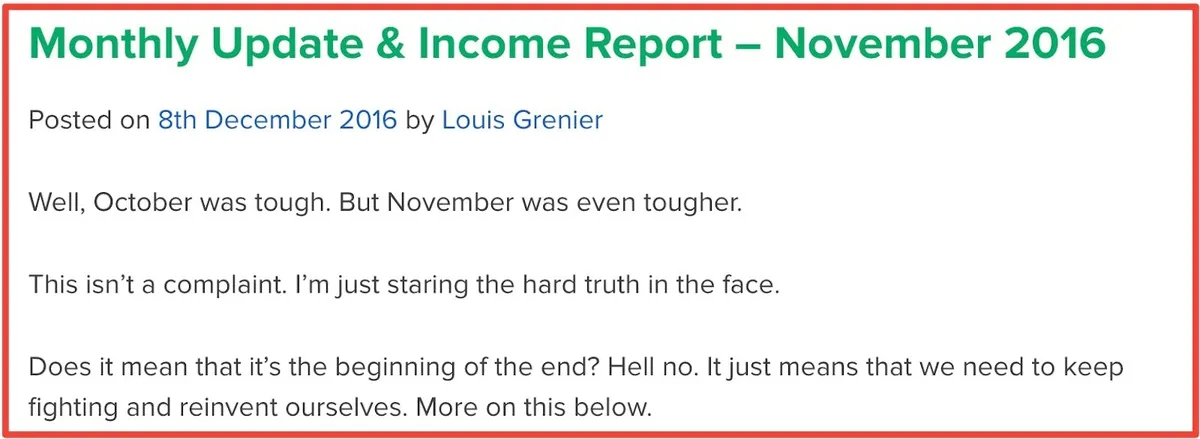
I’d even share our profit and expenses.
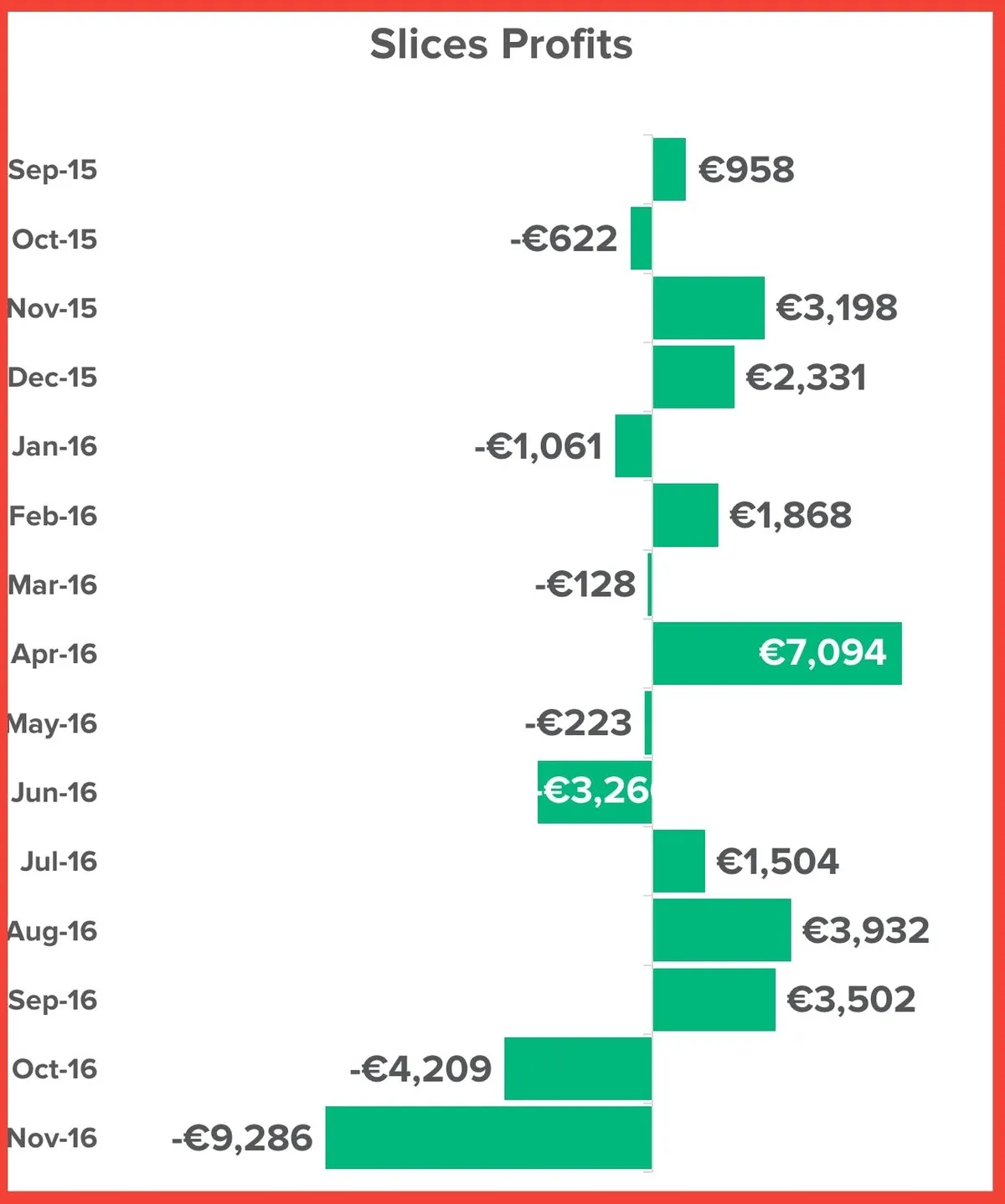
It got us attention in our little Dublin market. I didn’t have the energy to keep that agency running long enough to reap the rewards, but the principle stuck with me. Radical transparency is a distinctive-brand move, not a virtue signal.
In Chapter 10 of Stand The F*ck Out (“The Spices”), I call this a spice: a tangible behaviour that brings your point of view to life in a way your segment actually notices. A good one is unclaimable by others. Big brands can talk about honesty. Very few can behave that way, because they’ve got too much to lose.
What is the pratfall effect?
The pratfall effect is the tendency to find someone more likeable and more trustworthy after they reveal a flaw or make a small mistake, as long as they’re already seen as competent.
Elliot Aronson, Professor of Psychology at Harvard, first showed it in 1966. Richard Shotton, behavioural scientist and author of The Choice Factory, explains the experiment:
“If you admit a weakness, exhibit flaws, you become more appealing. Aronson recruited someone to take part in a quiz and gave that contestant the answers. The guy does amazingly well, gets 90% of the questions, wins by miles. After he’s done, he makes a pratfall, a small blunder. He stands up and spills a cup of coffee down himself. Aronson plays the recording to participants in one of two ways: either they hear the entire episode, or they just hear the great quiz performance. Then he asks everyone how appealing they find the guy. The people who heard the mistake found the contestant significantly more appealing.”
One condition matters. The flaw has to sit on top of real competence. Spill the coffee after you win the quiz and you look human. Spill it after you fail and you’re just clumsy.
Why your competitors won’t touch it
There’s so much bragging, so much bullshit, so much lying, so many over-the-top statements, so many buzzwords that mean nothing. Everyone wants to be seen as perfect. Perfect track record, perfect case studies, perfect five-star reviews. Everyone’s making shit up because they think it’s the way to stand out.
Take the beauty industry. Jonathan Salem Baskin, author of Tell The Truth and a B2B advisor to Nissan, Apple, and Blockbuster:
“High-end women’s cosmetics literally promise that they reverse the flow of time. It’s amazing to see the nonsense that gets put in the marketing for those products. Ask their customers, ‘Do you think any of it is true?’, and they’ll say, ‘Well, no, but on the off-chance it might help…’”
Or take tech. DHH, the founder of Basecamp:
“They had to invent new words to describe something simple. For example, ‘monetization.’ I hate that word because it encapsulates everything rotten about this technology-driven approach to business. It pretends to make something simple seem complicated. It’s only complicated because people have something to hide.
This is the language of bullshit needed to describe the unsavoury. When you’re selling a good product that helps people and you sell it for a fair price, you just don’t need that vocabulary.”
That’s the tell. Complexity is fake-smart. Plain language is what you use when you’ve got nothing to hide.
I understand the pressure, though. You need to make sales. You need to please your boss, please the board, make ends meet. Paul Mellor, MD of the British agency Mellor&Smith, gets it too:
“These marketers, especially CMOs or VPs of Marketing, are earning pretty good wages. They’ve got a mortgage, probably a second mortgage on the holiday home, kids in private school. They’ve got a lot to lose to go against the grain. It’s much easier to sit with the crowd where everyone is exactly the same.”
Pratfall effect vs. the tactics people confuse it with
The pratfall effect only works when the flaw is real and the confession costs you something. These lookalikes don’t work the same way.
| Move | What it is | Does it build trust? |
|---|---|---|
| Pratfall effect | Admitting a genuine weakness on top of proven competence | Yes, that’s the finding |
| Humblebrag | A fake flaw that’s actually a boast (“we care too much”) | No. Buyers read it as bragging |
| False modesty | Downplaying a strength you clearly have | No. Reads as fishing for praise |
| Radical transparency | Publishing the real numbers, flaws and all | Yes, when the flaw is material |
The line is simple. If the “flaw” makes you look better, it’s a humblebrag and everyone can smell it. If admitting it could actually lose you a deal, that’s the pratfall effect doing its job.
The reviews trap: why perfect ratings backfire
You might think buyers trust you more when every review is five stars. They don’t.
Richard Shotton again:
“In 2015, Northwestern University scraped 111,000 product reviews across 22 categories and analysed the correlation between average rating and likelihood to purchase. Likelihood to purchase increased as the rating went up until it hit a tipping point, somewhere between 4.2 and 4.4 out of 5. After that point, likelihood to purchase decreased as the rating went up. Consumers didn’t trust perfection.”
So if you run a brand, whatever the size, and you have negative reviews, don’t be ashamed of them. Don’t be the site that only shows the perfect ones. Put a few of the poor ones up and explain what happened.
6 examples of the pratfall effect in marketing
Example #1 - David Darmanin, co-founder of Hotjar
How do you feel about David after reading this?
“One thing that’s important to share, especially for anyone who wants to be an entrepreneur: when we were starting off, we honestly had no clue what we were doing. But we focused on what was important: our users and value creation. Things settled themselves. We figured it out.”
I’m willing to bet you have a good feeling about the guy, even if it’s the first time you’ve heard of him or his company. That’s the pratfall effect in action.
Example #2 - Guinness
The Irish brand admits a flaw: pouring a pint of Guinness takes longer than pouring other beers. There’s a reason, though. It tastes better.
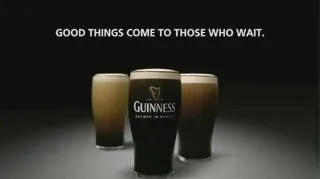
The fact that it takes a long time implies it must be worth the wait.
Example #3 - Listerine
Their mouthwash tastes bad.
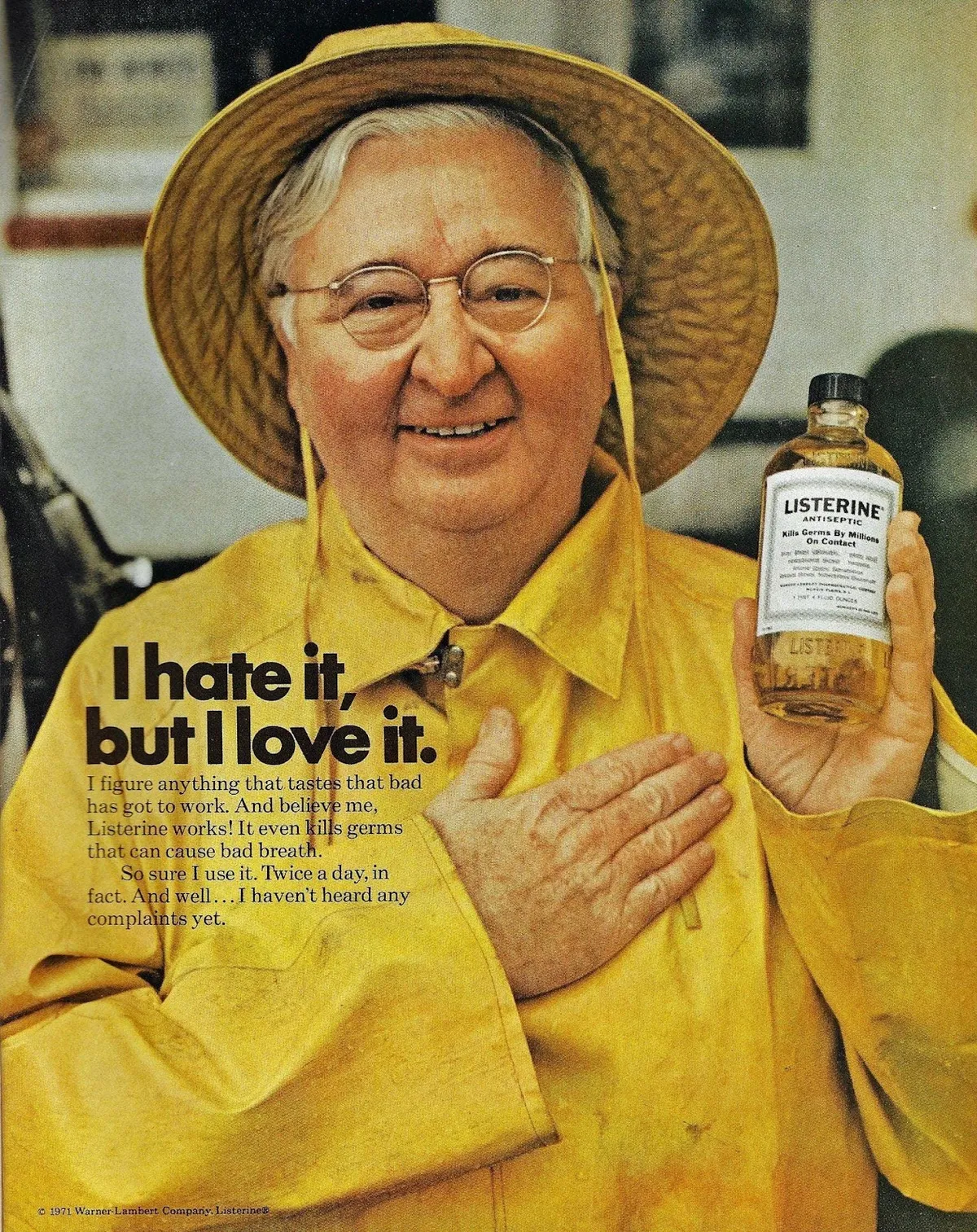
They admit it, because “something that tastes that bad must be good for you.” A mouthwash that tasted great and did the job would be too good to be true.
Example #4 - Volkswagen
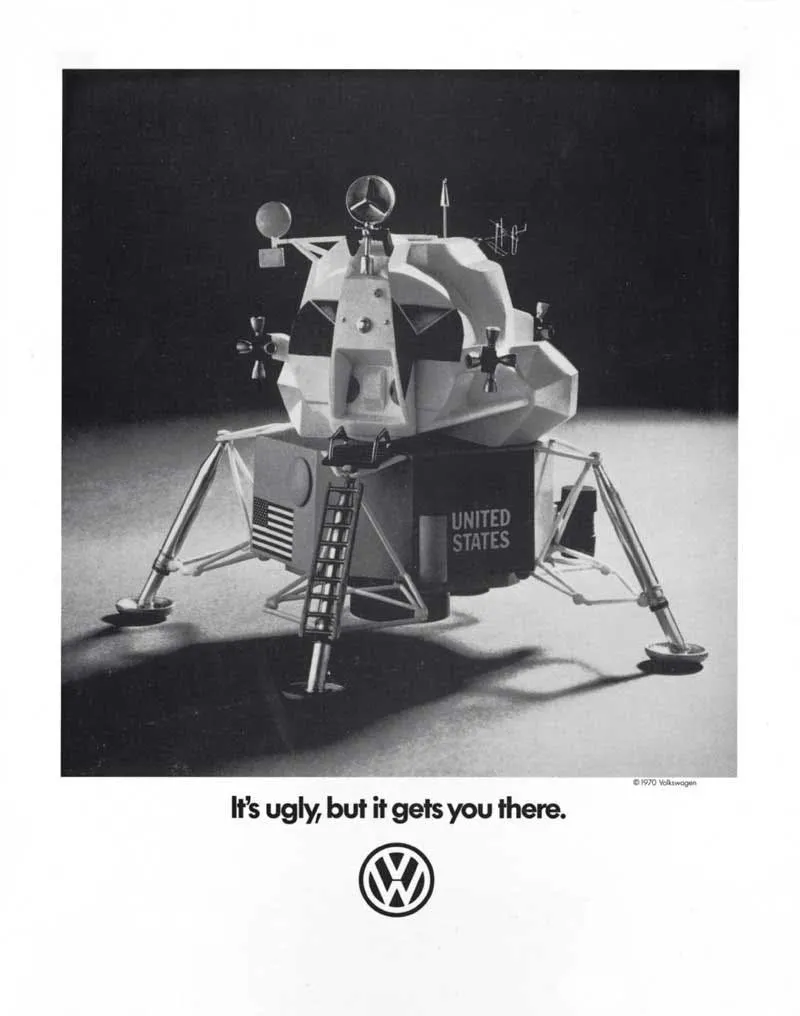
The classic “Think small” and “Lemon” ads did the opposite of every car ad at the time. They pointed at the car’s flaws. It worked.
Example #5 - CXL
CXL, one of the best marketing training programs out there, shows the depth of their content by publishing a real customer review that admits they’re not for everyone.
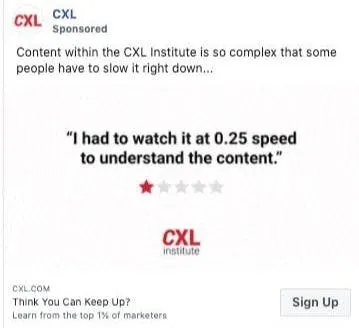
They tell you plainly: they don’t cover content you can watch on YouTube for five minutes.
Example #6 - Oatly
Oatly, a drink made from oats and not cow milk, admits the taste isn’t their best asset.
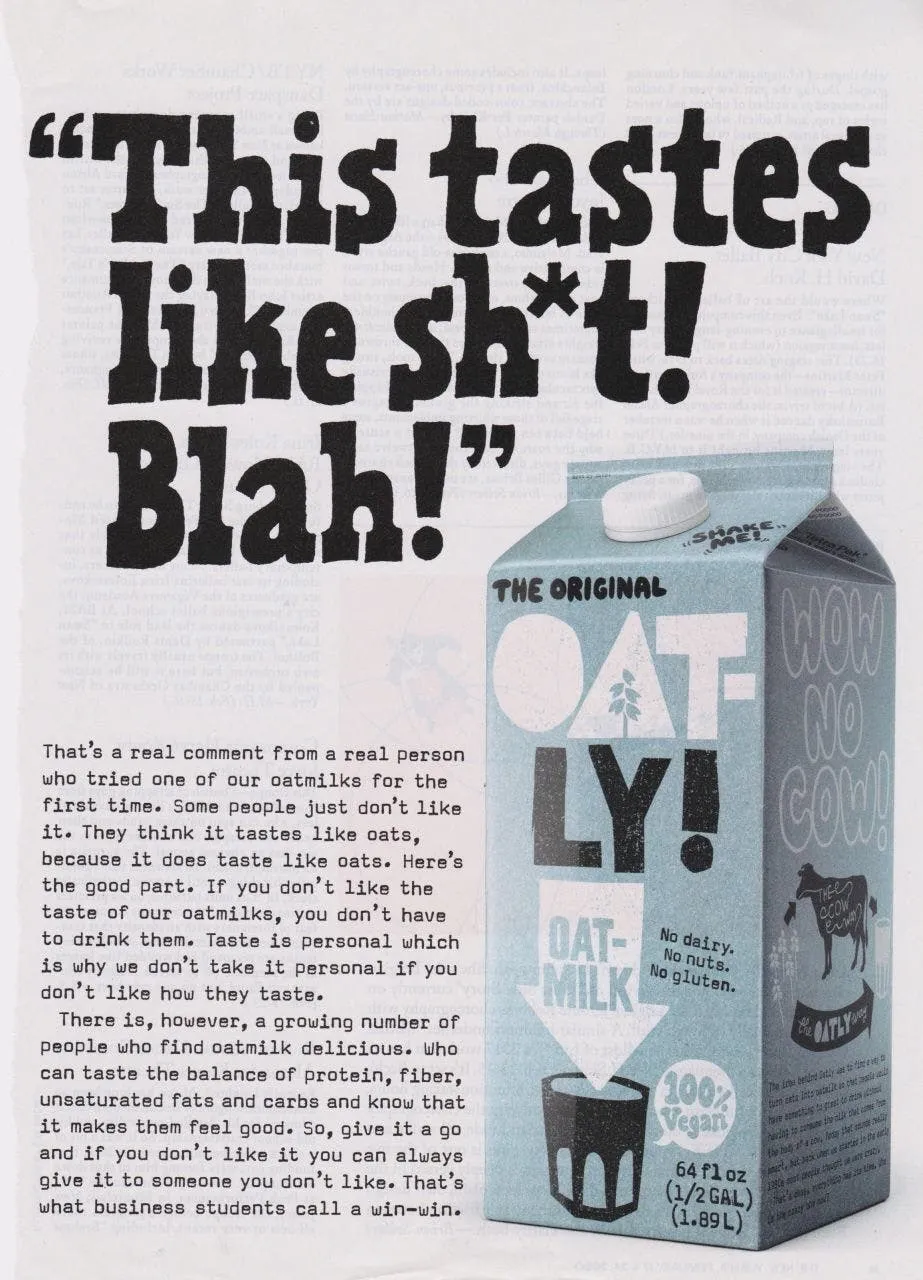
They focus on the ingredients and the alternative to cow milk instead.
How to use the pratfall effect in your marketing
Wherever you are, whatever you sell, you can use it. Almost every company you compete with is too scared to try. They’ll challenge it internally and kill the idea before it’s born. That’s your opening.
Step #1 - Challenge your beliefs about transparency
You have a lot to lose by NOT going against the grain. You’re facing obscurity. Think about what you’re missing by not running these ads, not putting that honesty in your marketing. Take the risk. No one else in your industry is.
Step #2 - Get unbiased feedback
Ask your customers and employees: “Be honest. Do you think what we’re saying is true? What do you hate most about our category?”
Get them on a call, share your screen, run messaging tests. Ask them to be brutally honest. Everyone has a bullshit detector and it’s well tuned. This is also how you convince your boss or board to try it: show them the raw feedback, watch them squirm, then move on.
Step #3 - Step away from the hyperbole
Jonathan Salem Baskin calls it the “litmus test of accuracy.”
“If you’re editing copy for an ad or writing social posts, challenge yourself to step back from the hyperbole. Don’t just put out something ‘on brand’, put out something ‘on truth.’ That’s something you can start doing without any approval.”
Step #4 - Admit your flaws
What do you do exceptionally well? What do you compromise on to deliver that strength? Name the compromise. Customers will rationalise your negatives and rave about your positives.
Step #5 - Challenge the clichés
Play inside your category. When everyone else is bragging, do the exact opposite. Say what others are too afraid to. Lean on what customers tell you. Remove the clichés they hate. Double down on what they love.
Go for it. No compromise.
Common mistakes teams make with the pratfall effect
- Faking the flaw. “We care too much” isn’t a weakness, it’s a humblebrag, and buyers spot it instantly.
- Admitting a flaw before you’ve shown competence. The coffee only helps after you win the quiz. Prove you’re good first.
- Picking a flaw that kills the deal. Admit the long pour, not that the product doesn’t work. The weakness has to be survivable.
- Doing it once, in one campaign. Transparency is a spice. It has to show up everywhere, every day, or it reads as a stunt.
- Copying a competitor’s flaw. Your flaw has to be yours. A borrowed confession sounds hollow.
- Hiding the negative reviews. Perfect ratings past 4.4 lower trust. Show a few bad ones and explain them.
FAQ
What is the pratfall effect in simple terms?
It’s the tendency to like and trust a competent person more after they show a flaw or make a small mistake. A skilled person who spills their coffee comes across as more human, and more likeable, than the same person who does everything perfectly.
Who discovered the pratfall effect?
Elliot Aronson, a social psychologist at Harvard, demonstrated it in a 1966 experiment. A high-performing quiz contestant was rated more likeable when participants heard him spill a cup of coffee afterwards, compared to when they only heard the flawless performance.
Does the pratfall effect work for everyone?
No. It only works when the person or brand is already seen as competent. If you admit a flaw before you’ve proven you’re good, you just look incompetent. Competence first, confession second.
How do you use the pratfall effect in marketing?
Admit one real, survivable weakness out loud, on top of a genuine strength. Guinness admits the slow pour. Listerine admits the bad taste. Do it consistently across your brand, not once, and back it with unbiased customer feedback so the flaw you admit is one buyers already believe.
What’s the difference between the pratfall effect and a humblebrag?
A humblebrag is a fake flaw that’s actually a boast, like “we work too hard.” The pratfall effect uses a genuine weakness that could cost you something. If admitting it makes you look better, it’s a humblebrag and buyers see through it.
Why do too many five-star reviews hurt sales?
Northwestern University found likelihood to purchase peaks between 4.2 and 4.4 out of 5, then drops as ratings climb higher. Buyers read a flawless rating as fake. A few honest negative reviews make the good ones believable.
The take
Almost nobody in your category will do this, which is exactly why it works. When everyone brags in the same words, the brand that admits one real flaw is the one that sounds like it’s telling the truth. And truth is probably the rarest thing in B2B right now.
You’ve got my permission. Go find the flaw you’ve been hiding, say it out loud, and watch it earn you more trust than any five-star claim ever did.
Related episodes
Key terms
Distinctiveness
Distinctiveness is what makes your brand noticed, remembered, and shortlisted when buyers are ready to act. It is not the same as differentiation. Differentiation gives people a reason to choose you. Distinctiveness gives people a reason to remember you. You need one or the other. Ideally both.
Personal Brand
It's not a brand. It's a reputation. 'Brand' implies manufactured. 'Reputation' implies earned. Jon Goodman didn't build a personal brand. He stopped hiding, developed strong POVs, and showed up relentlessly. The brand was a byproduct, not the goal.